Our Work
Life-Saving Access at Your Fingertips.
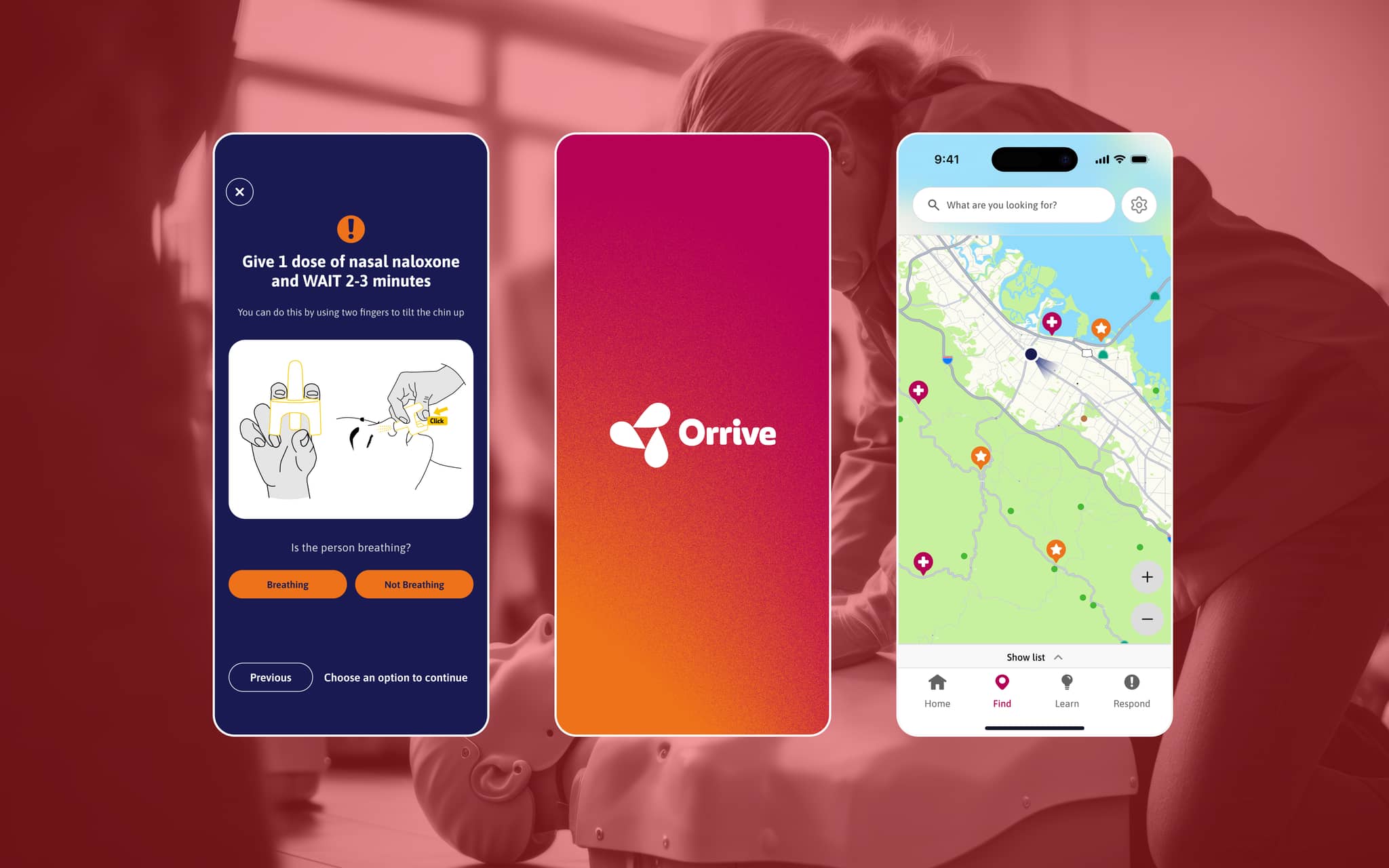
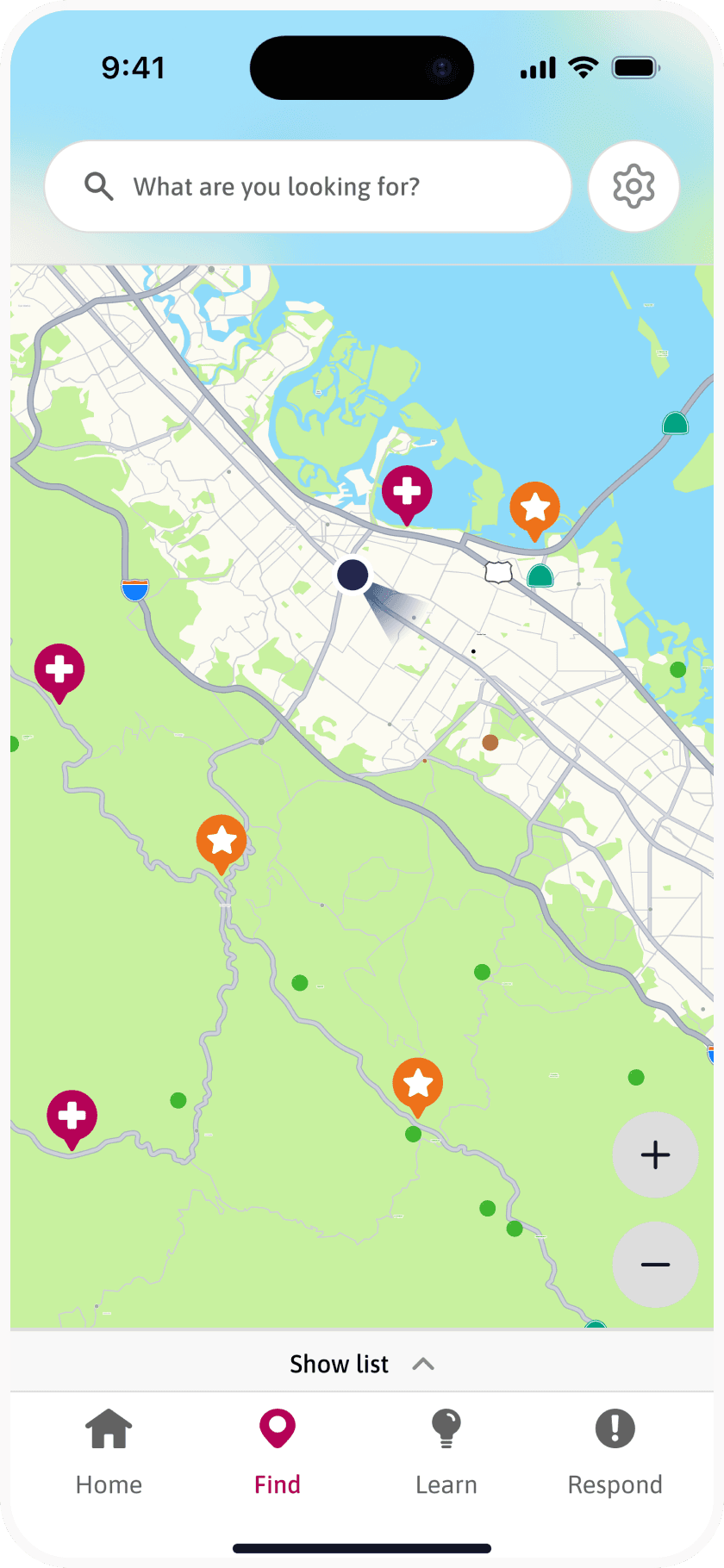
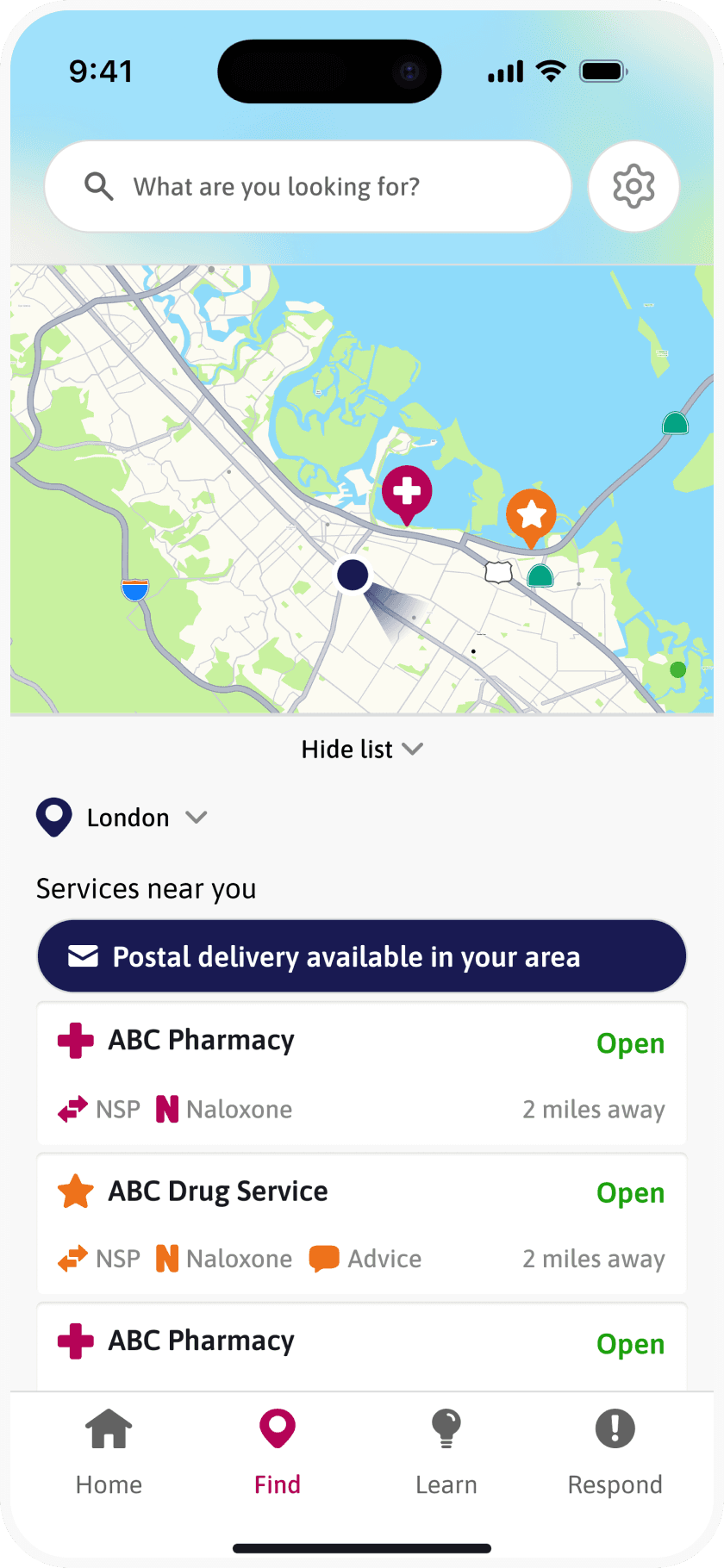
We partnered with Turning Point, who support over 197,000 with their services, to design a mobile app that supports harm reduction at scale — connecting people who use opioids, their families, and support workers to vital resources like Naloxone, overdose response tools, and stigma-free guidance in just a few taps.
A Mobile-First Platform for Harm Reduction at Scale.
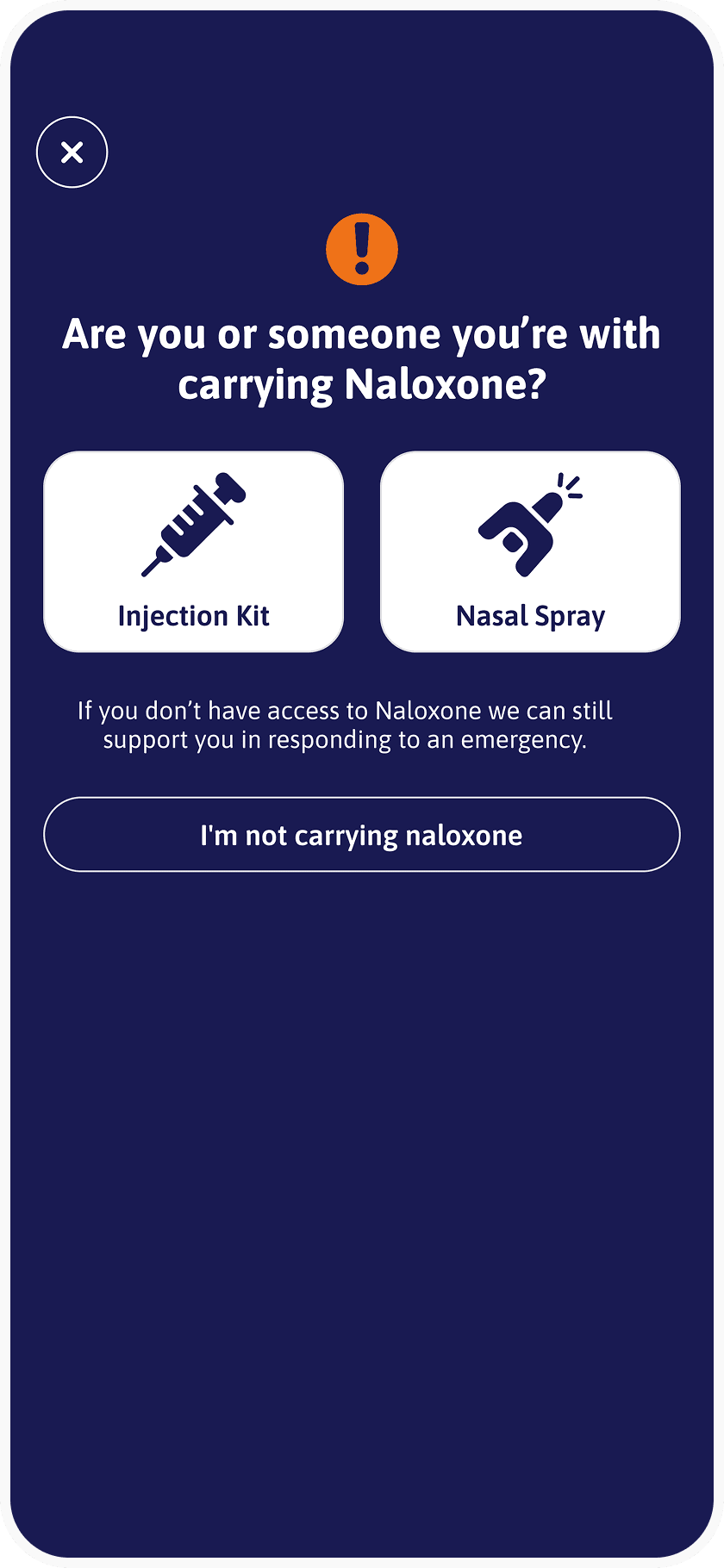
Arch worked with Turning Point to design a mobile application built around real-world urgency and user dignity. The app supports people who use opioids, their families, outreach workers, and health professionals — offering a fast, anonymous, and accessible way to find services and act in emergencies.
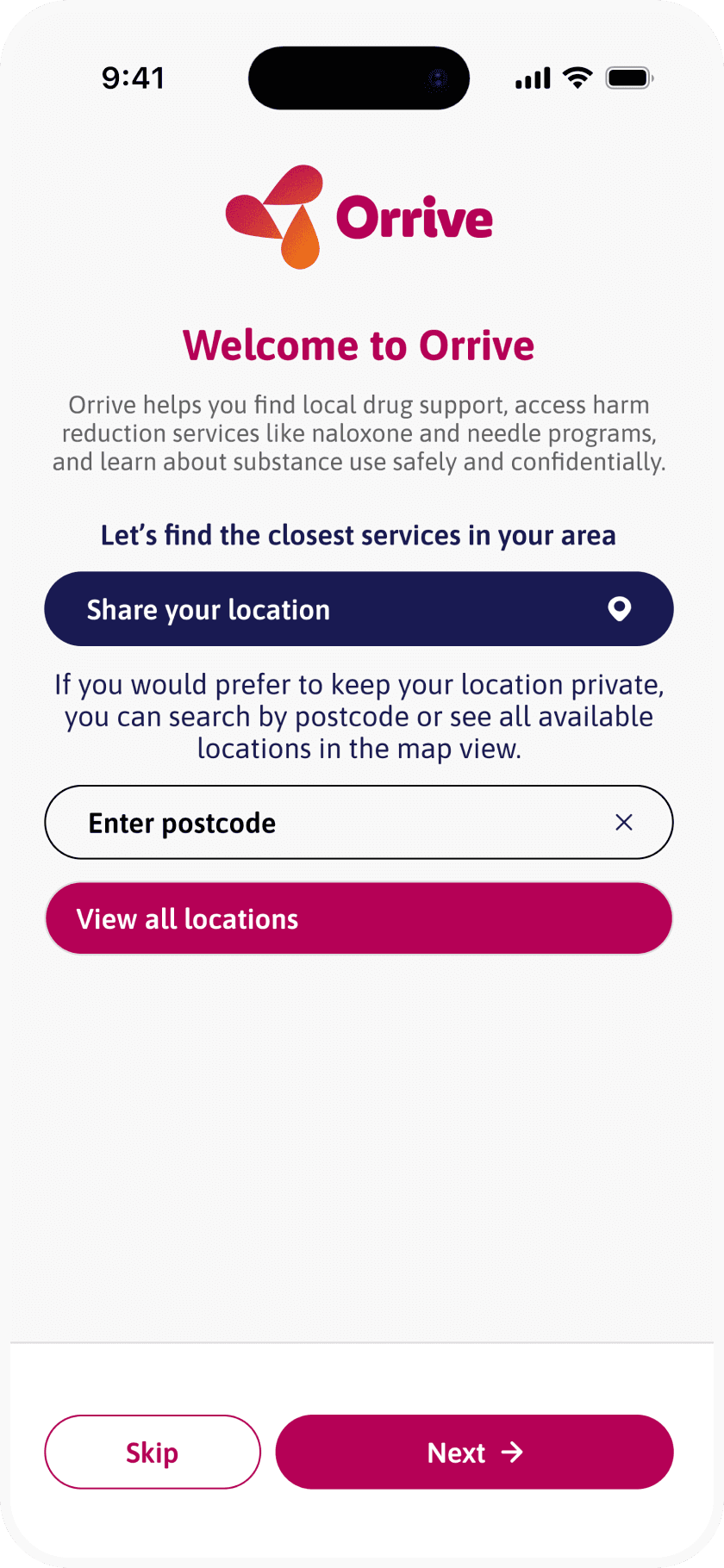
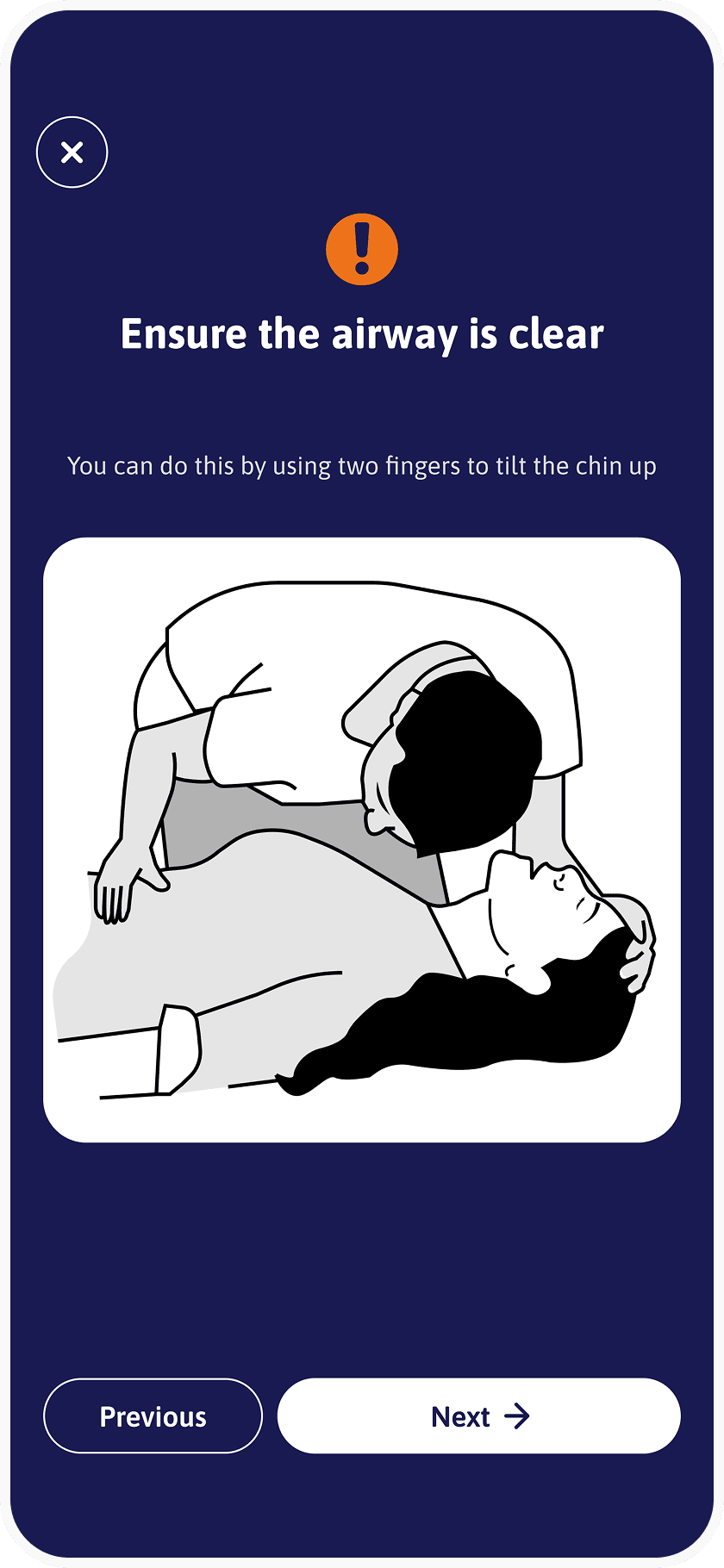
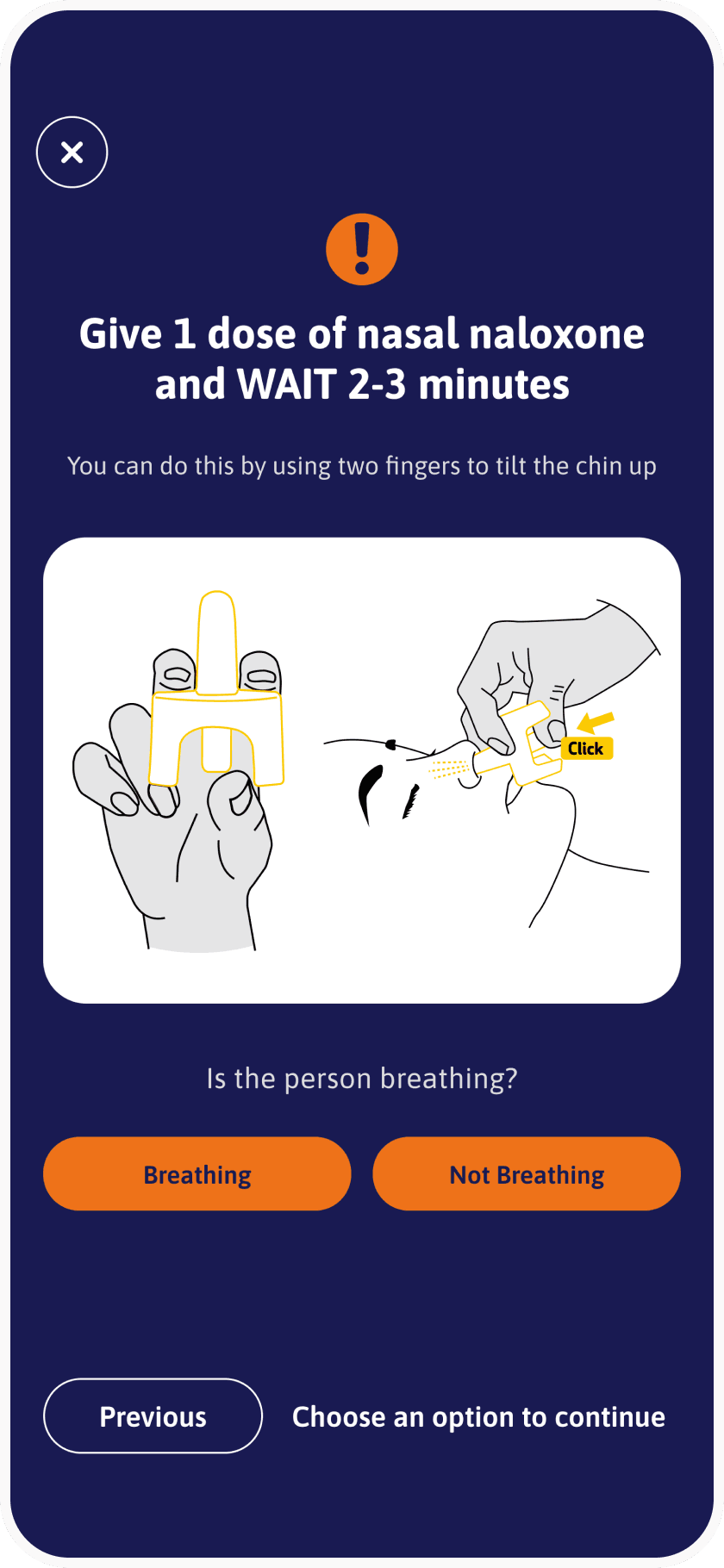
From the outset, the design focused on reducing barriers to use. There’s no account creation, and location use is always consented. Core features like crisis mode, offline support, and Naloxone-specific guidance were prioritised to reflect high-stress situations and urgent need.
Working from a detailed set of user personas and Turning Point’s harm reduction strategy, we designed a modular, component-based mobile interface that prioritises speed, clarity, and trust. The experience is powered by a robust hybrid architecture using Flutter and Laravel, with Filament CMS enabling the Turning Point team to manage content in real time — without developer intervention.
Accessibility was treated as a core design principle, not a feature. We applied WCAG 2.2 AA standards throughout, using plain English and supportive visuals to help users with low literacy, language barriers, or cognitive load. The result is a stigma-free, user-first platform that feels intuitive and empowering — even during moments of crisis.
A Mobile-First Platform for Harm Reduction at Scale.
Arch worked with Turning Point to design a mobile application built around real-world urgency and user dignity. The app supports people who use opioids, their families, outreach workers, and health professionals — offering a fast, anonymous, and accessible way to find services and act in emergencies.
From the outset, the design focused on reducing barriers to use. There’s no account creation, and location use is always consented. Core features like crisis mode, offline support, and Naloxone-specific guidance were prioritised to reflect high-stress situations and urgent need.
Working from a detailed set of user personas and Turning Point’s harm reduction strategy, we designed a modular, component-based mobile interface that prioritises speed, clarity, and trust. The experience is powered by a robust hybrid architecture using Flutter and Laravel, with Filament CMS enabling the Turning Point team to manage content in real time — without developer intervention.
Accessibility was treated as a core design principle, not a feature. We applied WCAG 2.2 AA standards throughout, using plain English and supportive visuals to help users with low literacy, language barriers, or cognitive load. The result is a stigma-free, user-first platform that feels intuitive and empowering — even during moments of crisis.
FEATURES
App details.
DESIGNING FOR LIFE SAVING ACTION